At the office of Capitol Smiles, we take a prevention-first approach to oral health. Regular oral exams are more than a quick check of your teeth — they are an opportunity to evaluate the health of your entire mouth, identify early signs of trouble, and build a personalized plan that keeps small issues from becoming major problems. Our preventive services include comprehensive exams, professional cleanings, oral cancer screenings, and clear guidance on home care, diet, and habits that influence long-term oral health.
Your initial appointment establishes the baseline we use to monitor changes in your mouth over time. We begin by reviewing your medical and dental history and discussing any concerns or symptoms you may have noticed. That conversation helps us understand how medications, medical conditions, or lifestyle factors might affect your oral health and guides the clinical portion of the exam.
The clinical exam includes a careful inspection of your teeth, gums, tongue, and the soft tissues of the mouth, as well as an assessment of your bite and jaw joint function. We look for signs of decay, worn or fractured teeth, inflamed gums, lesions or sores, and any indicators of clenching or grinding. When indicated, we take targeted diagnostic images to examine structures that can’t be seen with the naked eye.
When the exam is complete, we review our findings with you in clear, straightforward terms and outline recommended next steps. That might range from reinforcing home care routines to scheduling preventive or restorative treatment. Our goal is to make sure you leave with a clear understanding of your oral health and practical, achievable steps to protect your smile.
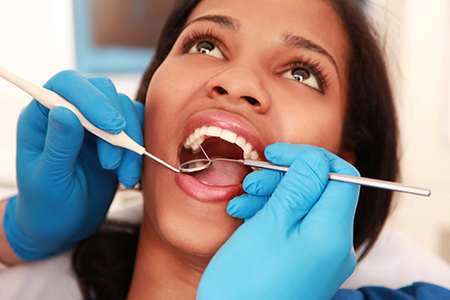
A thorough oral exam is also an important screening tool for broader health concerns. Oral tissues often show early signs of systemic conditions — for example, changes in gum tissue, persistent dry mouth, unusual oral lesions, or unexplained bleeding can all point to health issues that deserve attention. Because of these links, dentists play a valuable role in spotting signs that may warrant coordination with your medical provider.
Research continues to clarify connections between oral disease and systemic conditions. Chronic inflammation in the mouth, especially from untreated gum disease, has been associated with higher risks for cardiovascular disease, adverse pregnancy outcomes, and complications in people living with diabetes. While the relationships are complex, identifying and managing oral inflammation is a meaningful step toward better overall health.
We include oral cancer screening as a routine part of our exams. Early detection dramatically improves treatment outcomes, so we carefully evaluate the lips, tongue, floor of the mouth, and other soft tissues for any suspicious changes. If we identify anything of concern, we discuss appropriate follow-up and, when necessary, refer for further diagnostic testing or specialist evaluation.
Cardiovascular disease
Diabetes-related oral complications
Respiratory conditions that can be affected by oral bacteria
Digestive disturbances linked to oral infections
Neurological concerns where oral symptoms may be early indicators
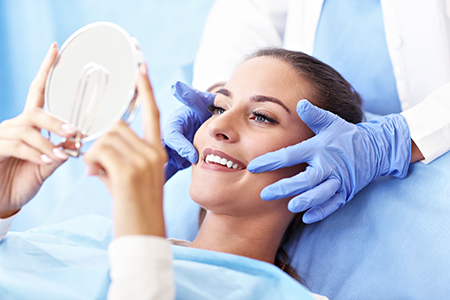
Consistent checkups and professional cleanings are the backbone of effective preventive care. During a cleaning visit, our hygienists remove plaque and hardened tartar that brushing and flossing can miss. Removing these deposits lowers the bacterial load in your mouth and reduces the risks for cavities and gum disease. A clean and polished mouth also helps you feel refreshed and confident between visits.
We typically recommend periodic visits so we can monitor trends — such as the progression of wear, changes in gum health, or evolving restoration needs — and intervene early when treatment is simpler and outcomes are better. Routine visits are also the best time to update the patient record, refresh x-rays when necessary, and tailor home-care advice to your changing needs.
Education is part of every appointment. We take time to demonstrate effective brushing and flossing techniques, review how diet and habits like tobacco use affect oral health, and suggest practical changes that fit your lifestyle. For children and adolescents, regular visits help establish healthy habits and allow us to monitor growth and development, making timely recommendations when orthodontic evaluation is appropriate.
Above all, routine care is about prevention. By catching small problems early and reinforcing healthy behaviors, we help you preserve natural teeth and avoid more invasive treatments down the road.
Visual inspection alone cannot reveal everything. Diagnostic imaging allows us to see the parts of your teeth and supporting structures that are hidden from view. X-rays detect cavities between teeth, assess the health of roots and bone, and reveal issues such as impacted teeth, abscesses, or the early stages of bone loss that might otherwise go unnoticed until symptoms appear.
Modern digital radiography has transformed how these images are captured and used. Digital sensors produce high-resolution images instantly, with lower radiation exposure than older film techniques. The images integrate seamlessly into electronic records, so we can compare current and past images side-by-side to spot subtle changes over time.
Beyond basic two-dimensional films, three-dimensional imaging is available when the situation calls for it. Cone-beam computed tomography (CBCT) provides a volumetric view of the jaws, sinuses, and surrounding anatomy. CBCT images are especially useful for complex diagnostic questions and for precise treatment planning, such as implant placement or evaluating pathology in three dimensions.
We select imaging carefully and recommend only the views necessary to answer the clinical question at hand. Our approach balances diagnostic benefit with patient safety and comfort.
Different radiographs serve different purposes, and knowing what each image reveals helps demystify the process. A targeted periapical image focuses on an individual tooth from crown to root and is especially useful when evaluating root health or detecting infections near the root tip. Bitewing images highlight the crowns of back teeth and are the standard choice for spotting decay between teeth and assessing bone height near the tooth necks.
A full mouth series combines periapicals and bitewings to provide a comprehensive snapshot of all teeth and their supporting bone. Panoramic films give a broad two-dimensional overview of both jaws, showing tooth development, impacted teeth, and general jaw structure. Cephalometric images, which capture a side profile of the head, are commonly used when coordinating orthodontic assessment and treatment planning.
For more complex cases, three-dimensional CBCT scans offer unparalleled detail. These scans allow precise evaluation of bone volume and anatomy, which is invaluable for surgical planning and implant placement. We discuss the specific imaging options suitable for your situation and explain how each will contribute to an accurate diagnosis and safe, effective treatment planning.
Throughout every exam, our priority is to use imaging judiciously — obtaining the information needed to make the best clinical decisions while keeping patient exposure to a minimum.
In summary, a thorough oral exam combines careful examination, targeted imaging, and personalized education to protect your smile and support overall health. At Capitol Smiles, our team is committed to delivering thoughtful, evidence-based care so you can feel confident in your oral health. If you have questions or would like more information about oral exams, please contact us to learn how we can help.
Yes. We always welcome new patients and their families for care. Feel free to give us a call or reach out to us online to schedule a first visit or for any additional information on our office. We look forward to hearing from you!
Routine dental checkups and professional cleanings help ensure your smile remains in tip-top condition and that any developing problems receive the prompt care they require. While it's a good idea to schedule a checkup and cleaning twice a year, longer or shorter intervals between routine visits depend on your specific needs.
We understand that life gets complicated and busy, and for various reasons, you haven't been able to get to the dentist for care. Don't worry; it's always a good time to get back in touch with the health of your smile.
At Capitol Smiles, we offer skilled and compassionate care to address a wide range of dental needs. Whether you need a simple checkup and cleaning, restorations, periodontal treatment, root canal therapy, or the replacement of missing teeth to get your smile back into shape, we provide precise, gentle, stress-free treatment to give you a smile that is as beautiful as it is healthy.
Give us a call today; we're happy to address all your questions and concerns about getting your smile back in tip-top condition.
For pregnant women, practicing good oral care and seeing the dentist to maintain a healthy smile is considered an important component of prenatal care. Researchers have found that pregnancy not only increases the risk of oral health problems, but these problems may also lead to pregnancy complications. At the office of Capitol Smiles, we provide the skilled and compassionate care required to help expectant mothers keep their teeth and gums in tip-top condition. While certain procedures are not recommended during pregnancy, we provide the necessary care and take all the necessary precautions required.
Thanks to advances in modern dentistry, teeth that have been affected by a range of imperfections or that have sustained damage from trauma or dental decay can be restored to produce a naturally beautiful looking and functional smile.
As skilled and experienced providers of care, our office can effectively improve and enhance the appearance of teeth that are stained, discolored, misshapen, chipped, fractured, gapped, crowded, or broken down due to dental decay. At the office of Capitol Smiles, we offer a comprehensive selection of the leading-edge cosmetic solutions from teeth whitening procedures, dental bonding, tooth-colored fillings, and veneers, to prosthetic solutions and dental implants to rebuild complete and beautiful smiles.
Contact our office to learn more about the many ways we can help you create the smile you've always wanted.
If you're visiting Capitol Smiles for the first time, it is helpful that you contact your former dental office and have your records sent over to us. Make note of any problems you may have so that you can discuss them with your dentist.
To provide efficient service, we ask you to please bring your insurance card, an ID, plus any referral slips or diagnostic records given to you by another office. If you are taking medications, please note or make a list of what they are as you will need to provide that information.
Yes! We assure you that both you and your family will be in good hands at the office of Capitol Smiles.
We do our best to make sure every patient who steps into our office for care is put at ease. We provide precise and gentle care and our skilled, compassionate team strives to make every visit stress-free. You can rest assured that your smile is in the best of hands and that we are doing all we can to ensure your comfort throughout every procedure. While we always take the time to explain every step in care, feel free to ask us any questions about local anesthesia and methods of dental sedation.
At the office of Capitol Smiles, we strive to provide the highest quality of care to address all your dental needs. Once we've had the opportunity to examine your smile, we can give you a clear picture of any dental issues that are present, along with a quote for what the cost of treatment will be. The cost of care all depends upon the extent and complexity of issues affecting the health or appearance of your smile and the types of procedures that are required. Our goal is to make dental care more affordable so that you can begin treatment without any additional stress or delay.
Keep in mind that with routine dental checkups and periodic care, we can help prevent dental disease while treating emerging problems early in their onset to avoid larger issues and more expensive care down the road.
Routine dental checkups and preventive care procedures may be covered under your dental insurance plan requiring little to no out-of-pocket expense. We invite you to check our financial information page or give us a call to find out if our office participates with your plan, and if you have any other questions about dental insurance, dental savings plans, forms of payment, or financing options. We welcome your inquiries and do our best to help you begin care without additional stress or delay.
If you've lost a tooth due to injury, decay, gum disease, or any other reason, we recommend dental implants to replace missing teeth. Dental implants come the closest to replicating the look, feel, and function of your natural teeth.
Absolutely! Both flossing and brushing regularly are equally important to maintain your oral health. While brushing cleans the surface of your teeth, flossing cleans in between them. Flossing is important to prevent plaque buildup, which can cause gums to recede and lead to periodontal disease.
Even if you have dentures, it is still necessary to see a dentist! Dental checkups help ensure that your dentures are comfortable, fitting properly, and that there are no other problems. Beyond assessing your dentures, our dentist will also perform a thorough examination of the jawbone, and surrounding soft tissues both inside the mouth, the face, and neck, to confirm that you remain in good oral health.
Emergency dental care is a service we hope you'll never need- but if you do, the office of Capitol Smiles is here for you!
Whether you're suffering from a chipped tooth, toothache, or any problem affecting your oral health, you can be sure to get the prompt attention and compassionate care you require at our office. Patient care and comfort are our top priorities, and we offer a comprehensive range of the most advanced services to address a broad spectrum of dental needs.
While the pain of a toothache is one of the more common reasons that patients come to our office for emergency dental care, we also promptly treat emergencies that are not necessarily painful like crowns that have been dislodged and broken dentures that leave embarrassing gaps in one's smile.
You can rest assured that your oral health is in the best of hands at our office. We'll quickly determine exactly what's wrong, explain your treatment options, and then provide the precise and gentle care you require to alleviate your discomfort and get you back on the path to oral health and wellness.
Your health and comfort are our top priorities. If your dental emergency is painful, if it affects the appearance of your smile, or if you suspect that an infection is present, our office will make every effort to see you as soon as possible for care.
At the office of Capitol Smiles, we welcome patients of all ages for care and offer a comprehensive range of services designed to help every member of your family maintain a beautiful and healthy smile. Whether you or a loved one needs a routine checkup and cleaning, fillings, same-day crowns, a cosmetic smile makeover, the replacement of missing teeth or require the services of a skilled and compassionate emergency dentist, you can rely on our office for the highest quality care.
For more information on our office and the many services we provide, or to schedule an appointment for care, give us a call today.
At the office of Capitol Smiles, an oral exam is a structured clinical review of the teeth, gums, soft tissues, bite, and jaw function with an emphasis on prevention and early detection. The exam goes beyond a visual check to identify subtle changes that can signal decay, infection, wear, or other developing problems. By establishing a baseline during an exam, clinicians can compare future findings to detect changes early and intervene when treatment is simpler and more effective.
Oral exams also serve as a routine checkpoint for overall health because oral tissues can reflect systemic conditions such as diabetes or nutritional deficiencies. Regular exams allow the care team to recommend targeted home-care strategies, monitoring schedules, and referrals when medical coordination is warranted. This proactive approach helps protect natural teeth and supports long-term wellness.
Your first oral exam begins with a review of your medical and dental history and a conversation about any symptoms or concerns you have noticed. This context helps the clinician understand how medications, medical conditions, or habits may influence oral health and guides the clinical assessment. The clinical portion includes inspection of teeth and restorations, evaluation of gum health, palpation of soft tissues, and assessment of bite and jaw joint movement.
If indicated, the team will capture targeted diagnostic images to evaluate areas that cannot be seen visually, such as between teeth or below the gum line. After the exam, findings are explained in clear terms and prioritized so you understand recommended next steps. You will leave with practical guidance on home care and a plan for needed preventive or restorative care.
For many patients, scheduling oral exams every six months provides a reliable rhythm for preventive care, professional cleaning, and monitoring of any changes. That general guideline is often adjusted based on individual risk factors such as a history of gum disease, frequent cavities, smoking, or systemic conditions like diabetes that can affect oral health. Patients at higher risk may benefit from more frequent visits so problems can be caught and managed earlier.
The exam cadence for children, adolescents, and adults should reflect growth, development, and changing risk profiles over time. Your clinician will recommend a personalized schedule based on clinical findings and your oral health goals. Sticking to the recommended interval helps reduce the likelihood of more invasive treatment later on.
Oral cancer screening is a routine and essential component of a thorough exam, involving careful visual inspection and palpation of the lips, tongue, floor of mouth, palate, and other soft tissues. Clinicians look for suspicious changes such as persistent sores, unusual lumps or thickening, red or white patches, unexplained bleeding, and areas that do not heal as expected. Because early detection greatly improves outcomes, any suspicious finding is documented and tracked closely.
If an area of concern is identified, the team will explain appropriate next steps which may include further diagnostic testing, imaging, or referral to a specialist for biopsy. Practitioners emphasize self-awareness and will instruct patients on signs to watch for between visits. Timely evaluation and follow-up are the keys to effective management when abnormal tissue is found.
Dental x-rays reveal structures that cannot be seen during a visual exam, such as decay between teeth, root health, bone level, and hidden infections. These images are essential for diagnosing problems early and creating precise treatment plans when needed. The type of image—bitewing, periapical, panoramic, or three-dimensional CBCT—is selected to answer specific clinical questions.
Modern digital radiography produces high-resolution images with substantially lower radiation exposure than older film methods, and clinicians recommend imaging only when the diagnostic benefit outweighs exposure. CBCT scans are reserved for complex cases where three-dimensional detail is necessary for safe, accurate treatment planning. Your care team will explain the rationale for any imaging and answer questions about safety and frequency.
Evaluation for gum disease includes measuring pocket depths around teeth, checking for bleeding on probing, assessing gum recession, and observing tissue texture and color for signs of inflammation. These measurements help determine whether gingivitis or more advanced periodontal disease is present and guide the appropriate course of care. The clinician also reviews risk factors such as smoking, systemic health, and oral hygiene behaviors that influence disease progression.
When early signs of gum disease are found, the focus is on removing bacterial deposits, stabilizing tissue health, and coaching patients on targeted home-care techniques to lower inflammation. For more advanced disease, the team will outline a treatment plan, monitor response to therapy, and schedule follow-up exams to evaluate healing. Ongoing maintenance visits are often recommended to preserve results and minimize the risk of recurrence.
An oral exam includes assessment of tooth wear patterns, muscle tenderness, joint sounds, and range of motion, all of which can indicate teeth grinding (bruxism) or temporomandibular joint dysfunction. Clinicians look for flattened, fractured, or worn tooth surfaces and signs of muscle overuse that suggest parafunctional habits. Evaluating jaw joint function and patient-reported symptoms helps determine whether further diagnostic testing or conservative management is appropriate.
While oral exams can identify signs associated with sleep-disordered breathing—such as certain soft-tissue findings or bruxism—they do not replace a medical sleep evaluation. When a screening suggests possible sleep apnea or other breathing issues, the team will recommend collaboration with a qualified medical provider for definitive testing and treatment. Coordinated care ensures patients receive comprehensive evaluation for conditions that overlap dental and medical domains.
Common dental images include bitewings for detecting decay between back teeth, periapical films for evaluating individual tooth roots, and panoramic films for a broad view of the jaws and tooth development. Each image type answers specific clinical questions and helps the clinician detect disease that is not visible on clinical exam alone. A full mouth series may be used when a comprehensive baseline of all teeth and supporting bone is needed.
Three-dimensional CBCT imaging is reserved for complex diagnostic or treatment-planning scenarios, such as implant placement, evaluation of impacted teeth, assessment of pathology, or detailed analysis of bone anatomy. CBCT provides volumetric detail that two-dimensional films cannot, but it is ordered selectively to balance diagnostic benefit and patient safety. Your clinician will discuss why a particular image is recommended and how it informs care.
Prepare for an oral exam by bringing an up-to-date list of medications, recent medical history changes, and any dental records or images from other providers that are relevant to your care. Note symptoms you have experienced, such as pain, swelling, sensitivity, or changes in chewing or speech, so you can describe them accurately during the visit. If you have questions or specific concerns, write them down ahead of time to ensure they are addressed.
There is no special preparation required for a routine exam, and patients may brush and floss as usual before arrival. If you use a removable appliance or retainers, bring those items so the clinician can evaluate their fit and condition. Clear communication and having the right information available help the team provide an efficient and thorough evaluation.
After the exam the dentist will explain findings in straightforward terms, prioritizing immediate needs and preventive steps so you understand what matters most for your oral health. Recommendations may include home-care adjustments, scheduling a cleaning or restorative appointment, or arranging further diagnostic testing when necessary. The team will provide a clear plan and answer questions so you know what to expect next.
When treatment or monitoring is recommended, staff will help schedule appropriate follow-up visits and provide written or verbal instructions to support healing and prevention. If coordination with a medical provider or dental specialist is warranted, the clinician will discuss that pathway and the reasons for referral. At Capitol Smiles, the emphasis is on clear communication and practical follow-up to maintain long-term oral health.
Quick Links