Advances in dental materials and laboratory techniques have made it possible to replace missing teeth with results that look natural and feel comfortable. While dental implants and fixed bridgework are excellent options for many patients, removable dentures and partials continue to be a practical, reliable way to restore a healthy, functional smile.
At Capitol Smiles, we take a personalized approach to denture care, using high-quality materials and careful craftsmanship to create prostheses that support facial structure and restore everyday function. Our focus is on helping patients regain confidence in their ability to speak, eat, and smile freely.
We believe a well-designed denture should balance comfort, stability, and aesthetics. That means listening to each patient’s priorities, assessing oral health and bone support, and tailoring a solution that suits their lifestyle and long-term goals.
Losing one or more teeth changes the way your mouth works. Gaps in the dentition can make articulation more difficult, alter chewing patterns, and limit the kinds of foods you feel comfortable eating. Over time, these functional changes can affect nutrition, digestion, and overall quality of life.
Beyond function, tooth loss affects the tissues that support the face. Without the stimulation of natural tooth roots, the jawbone can begin to resorb, leading to a gradual collapse of facial height and a sunken appearance around the mouth. Replacing missing teeth helps preserve facial contours and maintain a more youthful profile.
When natural teeth are absent, neighboring teeth may drift into empty spaces, causing bite changes and creating areas that are harder to clean. These shifts can lead to additional wear, decay, or gum problems if left unaddressed. For these reasons, timely evaluation and treatment planning are important whenever tooth loss occurs.
Dentures are removable dental appliances composed of artificial teeth set into a supportive base that rests on the gums. They restore the appearance of a full dentition and provide a surface for chewing and speaking. Because they are removable, dentures offer the advantage of easy cleaning and inspection of the underlying tissues.
Full (complete) dentures replace all teeth in an arch, while partial dentures fill gaps when some natural teeth remain. Partial dentures often use clasps or precision attachments to secure the appliance to adjacent teeth, preventing unwanted movement and helping to maintain tooth alignment.
Unlike fixed bridgework or implants that are anchored to teeth or bone, removable dentures rely on tissue contours, saliva, and, in some cases, adhesives or implant attachments for retention. Modern denture materials and improved laboratory techniques allow for enhanced fit, natural-looking tooth shapes, and lifelike shades that complement facial features.
Full dentures are designed to replace an entire arch of missing teeth. A conventional full denture is made after the gums have healed from any extractions, which can provide a more stable fit once tissues are fully remodeled. Immediate dentures, by contrast, are inserted right after tooth removal so the patient never has to be without teeth; these may require adjustments as healing progresses.
Overdentures are a hybrid approach that use existing tooth roots or small-diameter implants as anchors to provide extra retention and preserve bone. Implant-supported dentures attach to strategically placed implants and offer a significant boost in stability and chewing confidence, especially for the lower jaw where traditional dentures may feel less secure.
Partial dentures come in a range of designs and materials. Frameworks may be metal for strength, flexible resin for improved comfort, or hybrid constructions that blend durability with esthetics. The right choice depends on the condition of the remaining teeth, the shape of the gums and jaw, and the patient’s preferences for maintenance and appearance.
Complete dentures can be tailored in many ways to meet each patient’s needs. Your clinician will consider ridge anatomy, lip support, bite relationships, and facial proportions when designing the prosthesis. The goal is to create teeth that not only look natural but also function smoothly with the muscles of the face and tongue.
Immediate dentures provide an expedient solution for patients undergoing extractions by allowing an immediate restoration of form and function. Because tissues change during healing, a follow-up plan usually includes relines or a transition to a conventional denture to achieve a long-term fit.
Implant-retained and overdenture options
Implant-retained overdentures and implant-supported designs can transform the denture experience for many patients. By anchoring the prosthesis to implants, these options reduce movement, improve chewing efficiency, and can greatly increase patient comfort and confidence.
Partial dentures do more than fill a gap; they help stabilize the remaining teeth and preserve occlusal (bite) relationships. Good partial design minimizes stress on natural teeth and encourages even forces during chewing. Precision attachments can improve esthetics by reducing visible metal and enhancing retention.
Material selection is an important part of the design process. Flexible resins can be less noticeable and more comfortable in some cases, while metal frameworks offer durability and thin profiles. Your dentist will discuss the advantages of each approach and recommend the best option for your mouth.
Throughout design and fabrication, we focus on creating a prosthesis that balances strength, comfort, and a natural appearance so the denture feels like a part of you rather than an appliance you wear.
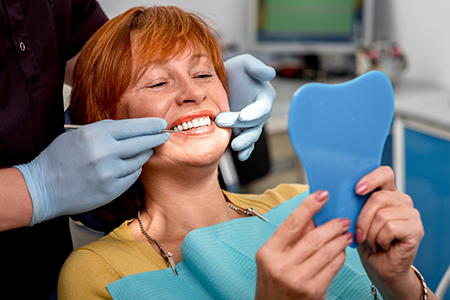
A successful denture begins with a detailed clinical assessment. We evaluate the health of any remaining teeth, the volume and shape of the supporting bone, soft tissue conditions, and how the jaws come together. Digital imaging and study models help the team visualize the end result before construction begins.
Impressions, bite records, and careful tooth selection follow the initial exam. During laboratory stages, technicians create a framework and perform try-ins to refine fit, color, and tooth position. These staged steps allow adjustments to be made so the final device meets both functional and cosmetic goals.
Pre-prosthetic procedures—such as smoothing bony ridges or extracting challenged teeth—may sometimes be recommended to improve the long-term comfort and stability of a denture. When implants are part of the plan, surgical placement and a healing period precede attachment of an implant-retained prosthesis.
At delivery, we check fit, speech, bite, and comfort, and provide guidance on how to wear and care for the new appliance. We emphasize realistic expectations and a collaborative approach so patients feel informed and confident throughout the process.
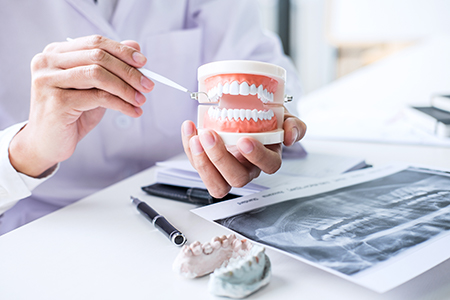
Adapting to a new denture is a process. In the first days to weeks, many patients notice increased salivation, minor soreness, or slight changes in speech. These reactions are normal; as muscles and tissues acclimate, most people find that comfort and function steadily improve with routine use and a few minor adjustments.
Practical strategies—like starting with soft foods, chewing evenly on both sides, and practicing speaking aloud—help speed adaptation. If sore spots develop, wearing the denture briefly until your adjustment appointment allows the dentist to see the issue and make targeted reliefs or modifications.
Daily care is essential for both the prosthesis and oral tissues. Rinse and brush the denture after meals, soak it nightly in water or a recommended cleanser, and maintain hygiene of any remaining teeth and gums with regular brushing. Removing the denture at night gives the gums a chance to rest and supports tissue health.
Long-term maintenance includes routine dental visits to evaluate fit, check for tissue changes or wear, and perform relines when the supporting tissues remodel. With proper care and periodic professional oversight, a well-made denture can serve a patient comfortably for many years.

Successful denture therapy is a team effort between the patient, the dentist, and the dental laboratory. Clear communication about goals, comfort levels, and daily habits helps guide design choices—from tooth shape and shade to the type of retention that will best match an individual’s needs.
Our practice emphasizes thoughtful planning and attentive follow-up. Whether a patient needs a full denture, a partial, or an implant-supported solution, we explain the care steps and follow-up schedule so adjustments and relines are performed proactively to maintain fit and function.
Capitol Smiles is committed to crafting dentures that restore both appearance and daily function. If you’re considering dentures or partials, we encourage you to reach out to our team to discuss your options and learn what to expect from evaluation through final delivery.
For more information or to schedule a consultation, please contact us — our staff is happy to answer questions and guide you through the process.

Today, it’s easier than ever to replace missing teeth and achieve natural-looking, durable, and long-lasting results! Depending on a patient’s dental needs, lifestyle, expectations of care, and budget, choices can include conventional fixed bridgework, dental implants, or removable partial and complete dentures. At the office of Capitol Smiles, we’ll discuss all your options in care and answer all your questions as you choose the solution that’s right for you.
With advances in dental materials and technology, today’s dentures are more comfortable and realistic-looking than ever before.
Whether you wear partial or complete dentures, it’s essential to see the dentist for routine care. Besides checking the fit and condition of your dentures and making any necessary adjustments, you’ll also receive a comprehensive exam to check on the health of any remaining teeth as well as the soft and hard tissues in and around the oral cavity.
A same-day denture offers an accelerated design and fabrication process that allows a patient to go from impression taking to denture insertion in a single day.
For patients who don’t want to wait after having teeth extracted, an immediate denture can be inserted the same day your teeth are removed. Sometime later you may need the denture relined to address any changes in its fit once the extraction sites have completely healed.
While no one wants to drop or break a partial or complete denture, accidents do happen. The good news is that in some cases, your partial or complete denture is reparable. It all depends on the extent of the damage. Don’t hesitate to contact our office if you’ve broken or damaged your denture. We’re happy to help.
The simple act of taking your partial denture in and out can cause certain types of metal clasps to loosen over time. When you come in for your checkup visit or contact our office for an adjustment, we’ll assess the fit of your partial and tighten the clasps for improved stability and comfort.
While rebuilding a complete smile is a worthwhile investment, our office is sensitive to the costs involved in dental care. We customize care and will discuss which treatment options address your needs, lifestyle, and budget. How much a new denture will cost depends on the type of the prosthesis, its design, and the materials used to fabricate the supportive base, teeth, and clasps or precision attachments. Dentures that include the placement of dental implants for added retention and stability typically involve additional costs.
If you have dental insurance, your coverage may include a new or replacement set of dentures. Our staff is happy to review your coverage with you to ensure you are maximizing your insurance benefits while minimizing any out of pocket expenses.
At the office of Capitol Smiles, we provide an extensive range of dental services, including the latest and most effective methods to help patients with missing teeth rebuild complete and beautiful smiles. As skilled and experienced professionals, we recognize that every patient is different, and every smile is unique. We’re passionate about what we do and take great pride in providing personalized treatment plans while treating our patients as valued partners in care.
Dentures and partials are removable prosthetic appliances that replace missing teeth and the supporting gum tissue. Full dentures restore an entire upper or lower arch while partials fill one or more gaps when some natural teeth remain. Both types rely on careful shaping, proper occlusion, and close adaptation to the tissues to restore chewing function and facial support.
Modern materials and laboratory techniques allow dentures to look lifelike and resist wear while fitting more comfortably than in previous generations. Retention is achieved through tissue contact, suction, clasps, precision attachments, or connections to dental implants for added stability. Proper design balances esthetics, comfort, and durability so the prosthesis integrates with normal speech and chewing patterns.
Full dentures replace all teeth in an arch and are fabricated after careful records and try-ins to achieve appropriate bite and lip support. Immediate dentures are placed at the time of extractions so a patient is never without teeth, though they may require subsequent adjustments as healing progresses. Overdentures and implant-supported dentures use natural roots or implants for extra retention and improved chewing efficiency.
Partial dentures come in several designs, including metal-framework partials for strength, flexible resin partials for comfort, and precision-attachment systems that minimize visible hardware. Each option offers trade-offs in thickness, visibility, and long-term maintenance, so material selection is matched to the mouth’s anatomy and the patient’s priorities. Discussing the benefits and limitations of each approach helps ensure an outcome that meets both functional and cosmetic goals.
When implants are incorporated, an overdenture can significantly reduce movement and improve confidence while eating and speaking. Implant connections range from simple locator attachments to bar-supported systems depending on stability needs and bone availability. The treatment plan will consider surgical needs, healing time, and long-term maintenance to determine the best attachment type for each patient.
Good candidates for dentures and partials include people who have lost multiple teeth or require replacement of an entire arch and who seek a non-fixed, maintainable solution. Patients with healthy oral tissues and adequate ridge anatomy typically achieve better long-term fit, though preprosthetic procedures can improve outcomes when bony irregularities or problematic teeth exist. When dental implants are an option, candidates are evaluated for bone quantity, general health, and any medical conditions that could affect healing.
The decision between a conventional denture, a partial, or an implant-supported design depends on the condition of remaining teeth, the patient’s bite, and functional goals such as improved chewing or speech. Patients who prioritize the ability to clean around natural teeth or who wish to minimize visible metal may prefer partials with precision attachments or flexible materials. A thorough clinical exam, diagnostic imaging, and a discussion of daily habits and expectations help determine the most appropriate solution for each individual.
The denture journey begins with a comprehensive clinical exam that assesses remaining teeth, gum health, ridge form, and facial proportions, often supplemented by digital images or models. Your dentist will take impressions, record bite relationships, and discuss tooth shape and shade to create a prosthesis that complements your features and functional needs. Planning may include pre-prosthetic procedures such as smoothing bony ridges or extracting unsalvageable teeth to optimize the fit and comfort of the final appliance.
Laboratory stages typically involve wax try-ins where tooth position, esthetics, and speech are reviewed and refined before the final processing. Delivery appointments focus on initial fit, occlusion, and phonetics, with instructions on wearing and caring for the prosthesis. Follow-up visits are routine so sore spots can be relieved, relines performed as tissues remodel, and any adjustments made to improve comfort and function.
Adjustment to a new denture or partial varies by individual but commonly takes several weeks for muscles and soft tissues to adapt to the appliance. Early experiences often include increased saliva, minor soreness, and subtle speech changes, which typically improve as you practice speaking and chewing with the prosthesis. Following the recommended wearing schedule and starting with softer foods while gradually reintroducing firmer items helps speed adaptation and builds confidence.
If persistent sore spots, difficulty with retention, or pronounced speech problems occur, return visits allow targeted adjustments to relieve pressure and improve stability. Regular checkups during the first few months are important to monitor tissue response and make any necessary relines or modifications. With attentive follow-up and small refinements, most patients find comfort and function steadily improve over time.
Daily hygiene is essential to prolong the life of the prosthesis and maintain healthy oral tissues; remove and rinse the denture after meals and brush it gently with a nonabrasive cleanser at least once a day. Clean any remaining natural teeth, gums, and tongue with regular brushing and flossing to reduce plaque accumulation and prevent gum disease. Soaking the denture overnight in water or a recommended cleanser helps keep it sanitary and relieves the tissues of continuous pressure.
Handle the appliance carefully to avoid dropping it and schedule routine dental visits to evaluate fit and tissue health. Avoid using household cleaners or abrasive pastes that can damage acrylic and alter the fit. Professional exams provide opportunities for relines, repairs, or adjustments that maintain comfort and function as the mouth changes over time.
Retention and stability depend on ridge anatomy, saliva, and the design of the denture; careful border molding and accurate impressions are foundational to a secure fit. For many patients, using a properly fitted adhesive temporarily enhances suction and confidence, but adhesives are not a substitute for a well-designed prosthesis. Implant-supported overdentures provide the most predictable improvement in retention by anchoring the denture to strategically placed implants.
Other techniques to improve stability include tissue conditioning, relining to adapt the base to changing ridge contours, and precision attachments on partials that transfer forces more evenly. Your dentist will assess the specific cause of instability and recommend solutions ranging from minor laboratory refinements to implant placement when appropriate. Selecting the right combination of design elements and follow-up care helps sustain a comfortable, functional fit.
Regular dental checkups are important because tissues remodel and dentures that once fit well can become loose, cause sore spots, or alter bite relationships over time. A reline recontours the denture’s tissue-facing surface to regain intimate contact with the gums and is commonly used when fit becomes less secure due to normal bone and soft-tissue changes. Repairs are indicated for cracked bases, broken teeth, or damaged clasps and should be handled promptly to avoid further complications or tissue injury.
Replacement may be recommended when significant wear, persistent instability, or repeated breakage compromises function or esthetics beyond what relines and repairs can correct. A comprehensive re-evaluation determines whether a reline, repair, or new prosthesis best meets long-term goals. Proactive maintenance and timely professional care extend service life and protect oral health.
Dentures and partials can temporarily change speech sounds and chewing patterns as the lips, tongue, and cheeks adapt to the presence of the appliance. Practicing speaking aloud, reading passages, and slowly chewing a variety of textures can accelerate the adjustment process and improve clarity. Starting with soft foods and gradually reintroducing firmer items while chewing on both sides helps balance occlusal forces and protects the denture from tipping.
With proper fit and design, most patients regain near-normal speech and substantially improved chewing function, although some limitations may persist with very hard or sticky foods. Implant-supported designs often provide superior chewing efficiency and reduce restrictions compared with traditional removable prostheses. Ongoing communication with your dentist ensures that any persistent difficulties are evaluated and addressed through adjustments or alternative strategies.
The office of Capitol Smiles emphasizes a personalized, stepwise approach that begins with a thorough assessment and clear communication about goals and expectations. Treatment plans balance comfort, function, and esthetics while considering conservative options such as partials or more stable solutions like implant-supported overdentures when clinically appropriate. Laboratory collaboration and staged try-ins ensure tooth position, shade, and occlusion are refined before final processing.
Follow-up care at our practice includes routine checks to monitor fit, tissue health, and prosthesis condition, with relines or adjustments scheduled proactively to maintain comfort. We provide patients with practical guidance on wearing schedules, cleaning techniques, and what to expect during the adaptation period so they feel supported throughout care. Open communication and timely maintenance are central to achieving predictable, long-lasting results.
Quick Links